In This Article 9
- 1Train Smarter, Stay Safer: Injury Prevention in BJJ Melbourne
- 2Understanding How Injuries Happen in BJJ
- 3Warming Up with Purpose
- 4Learning to Tap — and When to Let Go
- 5Choosing Partners That Help You Learn — Not Prove Yourself
- 6Off-the-Mat Recovery: The Other Half of Injury Prevention
- 7Key Areas to Protect in BJJ
- 8Train with Intention — Not Just Intensity
- 9Final Advice: Speak Up and Stay Aware
Train Smarter, Stay Safer: Injury Prevention in BJJ Melbourne
Brazilian Jiu Jitsu is known for its focus on control, technique and leverage over brute force — which is why it’s often called a “gentle art.” But anyone training consistently in BJJ in Melbourne knows that it still places considerable physical demands on your body, especially during sparring, takedowns, and intense positional scrambles.
Injuries in BJJ can range from mild (muscle strains or jammed fingers) to serious (torn ligaments or joint damage). While no physical sport is entirely risk-free, many injuries are preventable when you follow the right practices — and develop awareness both on and off the mat.
We spoke to experienced Melbourne-based practitioners and coaches to compile practical advice that can help you stay injury-free, no matter your rank or level of experience.
Starting out? Book a free trial class at Gracie Jiu Jitsu Melbourne and learn the art the safe, smart way.
Understanding How Injuries Happen in BJJ
The first step to avoiding injury is understanding how and when they’re most likely to occur. In a BJJ setting, this often comes down to:
- Poor preparation or skipping the warm-up phase
- Muscling through techniques or using excessive force
- Holding submissions too long or resisting them too late
- Sparring with partners who lack control or experience
- Neglecting rest, recovery and mobility work
Most of these risk factors can be minimised with awareness, coaching, and proper guidance — something Gracie academies across Melbourne prioritise from day one.
Warming Up with Purpose
Warming up is more than just going through the motions. It’s your chance to activate key muscle groups, open up your joints, and mentally transition into a state of focus and control.
Melbourne instructors recommend using your warm-up time to prepare for the specific movements you’ll be performing in class — not just to raise your heart rate. For instance:
- If you’ll be practising guard retention, include hip mobility drills and core activation.
- If the focus is on passing or takedowns, incorporate knee prep, footwork and balance exercises.
This tailored approach is standard at Gracie Jiu Jitsu Melbourne, where warm-ups often mimic elements of the lesson ahead.
Learning to Tap — and When to Let Go
Tapping is one of the most effective tools you have for injury prevention. Yet, beginners often hold out too long or resist taps out of pride or uncertainty.
It’s important to realise that tapping is not a loss — it’s a training signal. It’s how you communicate safety and reset. By tapping early and without hesitation, you protect your joints from hyperextension, ligament damage, and long-term issues.
Equally important: if you apply a submission, apply it gradually and release the moment your partner taps. This mutual respect keeps everyone safe and builds trust in your academy.
Choosing Partners That Help You Learn — Not Prove Yourself
Your training partner can make or break your experience. In BJJ, especially in the early stages, you want to train with people who understand pacing, have good control, and are focused on learning, not winning.
At academies across Melbourne — including Gracie — there’s an emphasis on building a culture of safety and mutual respect. If you ever feel uncomfortable rolling with someone, it’s entirely acceptable to opt out or ask to train with someone else.
Good partners:
- Match your intensity
- Are aware of your rank and physical cues
- Give feedback and support during drills
- Understand that both people should walk away from a roll better, not battered
Explore our smart rolling guide to learn how to approach sparring safely and effectively.
Off-the-Mat Recovery: The Other Half of Injury Prevention
Many newer students assume all the learning happens during class — but what you do outside the academy plays just as big a role in keeping you healthy and improving your performance.
Incorporate these recovery basics into your weekly routine:
Movement-Based Recovery
Use light, low-impact activities (walking, swimming, yoga) on your rest days to promote circulation and aid muscle repair.
Sleep and Nutrition
Your muscles, ligaments and joints need time and fuel to repair. Prioritise 7–9 hours of sleep per night and focus on anti-inflammatory whole foods.
Mobility and Prehab
Spend time working on areas that tend to tighten up in grapplers — such as hips, shoulders, and thoracic spine. Foam rolling, stretching and even occasional massage can make a noticeable difference.
Injury Checks and Early Treatment
If something feels off (a tight elbow, a nagging shoulder), don’t wait until it becomes serious. Visit a physio early — Melbourne has many BJJ-aware practitioners who understand the demands of grappling.
Key Areas to Protect in BJJ
Certain joints and areas are more prone to injury due to the nature of grappling:
Neck
Avoid resisting chokes or forcing head pressure in bad positions. Strengthen your neck progressively with safe drills and maintain posture in all positions.
Knees
Be mindful during guard transitions, leg entanglements, and takedown drills. Never twist or rotate forcefully under pressure.
Fingers and Hands
If you train in the gi, your fingers will take a beating. Rotate grips, use finger tape when needed, and avoid death grips that stress your joints unnecessarily.
Train with Intention — Not Just Intensity
A common mistake is assuming that going “hard” every roll is the fastest way to progress. In reality, intelligent intensity leads to greater skill development and far fewer injuries.
Use a varied training approach:
- Flow rolls (30–50%) to experiment and build fluidity
- Technical rolls (60–70%) to apply specific concepts with control
- Hard rounds (80–90%) only when you’re confident, well-rested, and with trusted partners
Consistency, not exhaustion, is what leads to long-term success in BJJ.
Final Advice: Speak Up and Stay Aware
If you’re injured, uncertain, or fatigued — let your coaches know. Good instructors will adjust your training or offer alternatives. At Gracie Jiu Jitsu Melbourne, coaches are highly experienced and approach student safety as a top priority.
Never ignore what your body is telling you. Injury prevention is as much about communication as it is about technique.
Want to learn in a safe, structured environment? Book your free BJJ Melbourne trial class today and discover a smarter way to train.
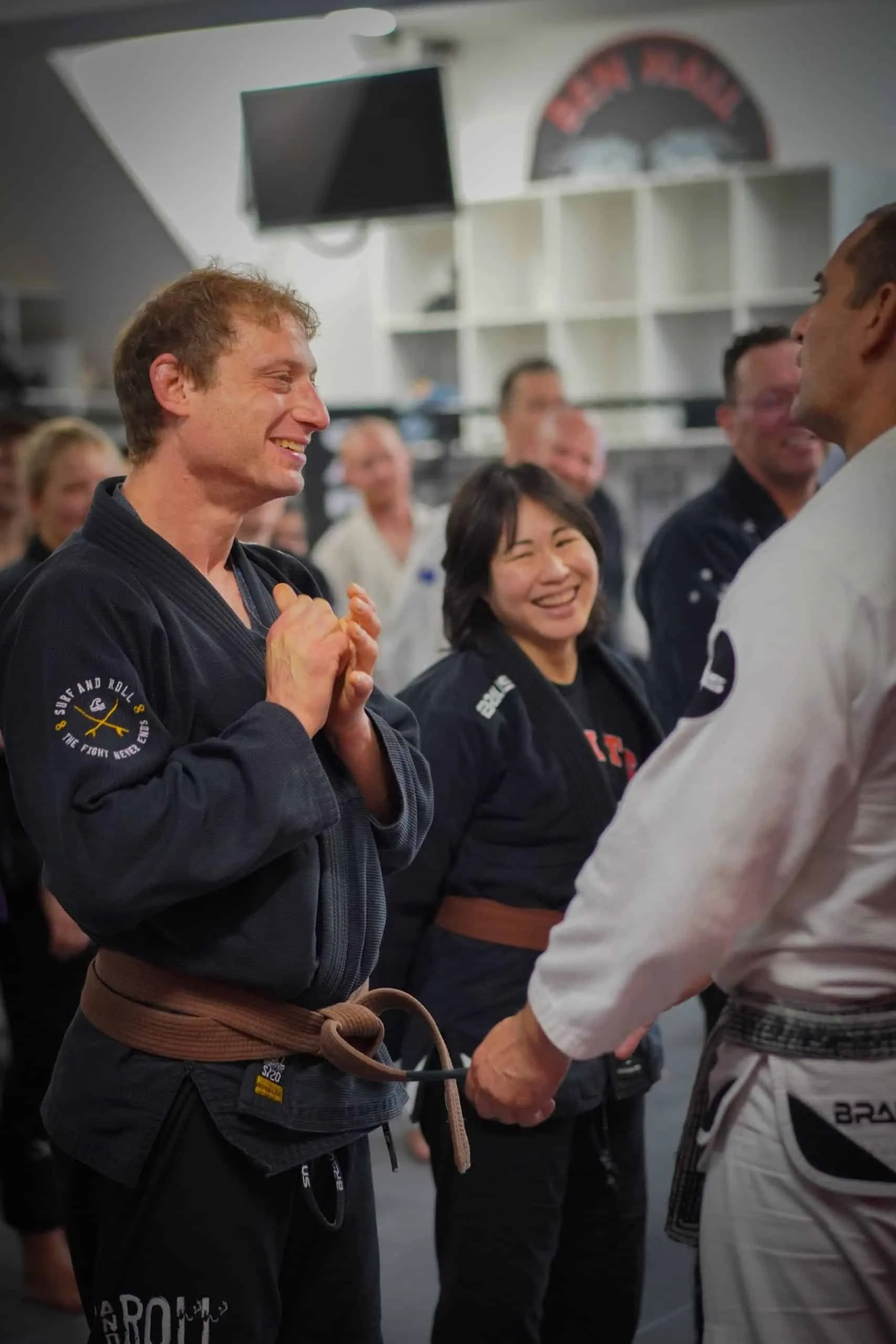
Prof. Ben Hall
4th degree black belt under Carlson Gracie Jr. 21 of his students have earned their black belt at this academy. Read his full story.