A Look Inside Your First Month at a Jiu-Jitsu Academy
So, you’ve decided to take the plunge into the world of Jiu-Jitsu—congratulations! Whether your goal is to learn self-defence, get fit, or compete, your first month at a Jiu-Jitsu academy is a crucial time filled with new experiences, challenges, and exciting progress.
But what exactly should you expect? How will your training evolve in the first few weeks? And what can you do to get the most out of your Jiu-Jitsu experience?
In this guide, we’ll walk you through everything you need to know about your first month at a Jiu-Jitsu academy, from what to bring to your first class to your expected progress after 30 days.
1. Preparing for Your First Jiu-Jitsu Class
Before stepping onto the mats, you’ll need to prepare both mentally and physically. Here’s what you should know before attending your first class:
What to Bring
- A Jiu-Jitsu gi (if required) – Some academies provide a loaner gi, while others allow you to train in comfortable athletic wear for your first few sessions.
- Rash guard & shorts – If your academy offers No-Gi Jiu-Jitsu, wear a rash guard and board shorts or leggings.
- Water bottle – Jiu-Jitsu training is intense, and staying hydrated is key.
- Towel & change of clothes – You’ll be sweating a lot, so a towel and fresh clothes for after class are a good idea.
- Flip-flops (thongs) – Jiu-Jitsu etiquette requires you to keep your feet clean, so wear thongs when off the mats.
Understanding Jiu-Jitsu Etiquette
Jiu-Jitsu academies have their own culture and etiquette, but some general rules include:
- Bow or shake hands before stepping onto the mat.
- Always wear a clean gi or training attire.
- Trim your nails to prevent injuries.
- Respect your training partners – tap early and often to avoid injury.
- Listen to your instructor and follow gym-specific rules.
2. What Happens in Your First Week of Jiu-Jitsu?
Class Structure
Most Jiu-Jitsu classes follow a similar structure, which typically includes:
- Warm-ups: Light jogging, hip escapes, and mobility drills to prepare your body.
- Technique Instruction: Your coach will demonstrate specific Jiu-Jitsu techniques, which you’ll practice with a partner.
- Drilling: Repeating techniques to reinforce muscle memory.
- Positional Sparring: Controlled sparring to apply techniques in a live scenario.
- Rolling (Live Sparring): Some academies introduce sparring early, while others may wait until you have more experience.
Common Challenges in the First Week
- Feeling Overwhelmed: Jiu-Jitsu has a steep learning curve, and it’s normal to feel lost at first.
- Fatigue: Your body will take time to adjust to the physical demands of grappling.
- Mental Frustration: Techniques may not make sense right away, but consistency is key.
Pro Tip: Focus on learning, not winning. Your goal in the first month is to absorb information and build a strong foundation.
3. Your Second and Third Week: Adapting to the Training
Building Muscle Memory
By weeks two and three, you’ll start to recognise common positions, such as:
- Guard (Closed, Open, Half-Guard) – Your first line of defence.
- Mount & Side Control – Dominant positions where you can control an opponent.
- Escapes – Learning how to get out of bad positions is a priority early on.
Physical and Mental Adjustments
- Your endurance will improve, but you might still feel sore after class.
- Techniques will start to feel more natural, and you’ll begin making connections between movements.
- You may start rolling (sparring) if your academy allows it early.
At this stage, many beginners experience their first “lightbulb moment” where a technique suddenly makes sense in live training.
Feeling overwhelmed in your first few weeks? That’s normal! Stay consistent, and if you have questions, our coaches are here to help. Drop by or contact us here.
4. Your Fourth Week: Seeing Progress and Setting Goals
By week four, you should feel:
- More comfortable on the mats – Movements feel smoother, and you’ll recognise key positions.
- More confident in basic techniques – You may have a few go-to moves that feel natural.
- Excited about learning more – You’ll start developing personal preferences in techniques.
Setting Long-Term Goals
After your first month, it’s time to set goals based on what excites you most:
- Self-Defence: Focus on fundamentals that work in real-world situations.
- Competition: If you’re interested in competing, ask your coach for guidance.
- Fitness & Fun: Jiu-Jitsu is an incredible way to stay active and engaged.
The key to progress is staying consistent. Even if you feel like you’re not improving, trust the process—Jiu-Jitsu is a long-term journey.Want to fast-track your progress? Private lessons are a great way to sharpen your skills. Enquire about private coaching here.
5. Frequently Asked Questions (FAQ)
1. How many times a week should I train as a beginner?
Most beginners start with 2-3 sessions per week to allow time for recovery while still making steady progress.
2. When will I be ready for my first Jiu-Jitsu belt promotion?
Jiu-Jitsu belt promotions are based on skill, consistency, and time spent training, not just attendance. Typically, it takes several months to a year to earn the first belt promotion.
3. What if I feel lost or overwhelmed in class?
Feeling overwhelmed is completely normal. Focus on learning one or two techniques per class rather than trying to absorb everything at once.
4. Can I train Jiu-Jitsu even if I’m not flexible or fit?
Yes! Jiu-Jitsu will naturally improve your flexibility and fitness over time. You don’t need to be in top shape to start.
5. How can I speed up my progress in Jiu-Jitsu?
- Train consistently.
- Ask questions.
- Watch instructional videos.
- Take notes after class to review what you learned.
Take the First Step in Your Jiu-Jitsu Journey
Your first month at a Jiu-Jitsu academy is filled with learning, challenges, and progress. While it may feel overwhelming at first, sticking with it will lead to incredible physical and mental growth.
Whether you want to train for self-defence, fitness, or competition, the journey starts with showing up and putting in the work.
Start Your Jiu-Jitsu Journey Today!
Want to experience Jiu-Jitsu for yourself? Book a free trial class today!
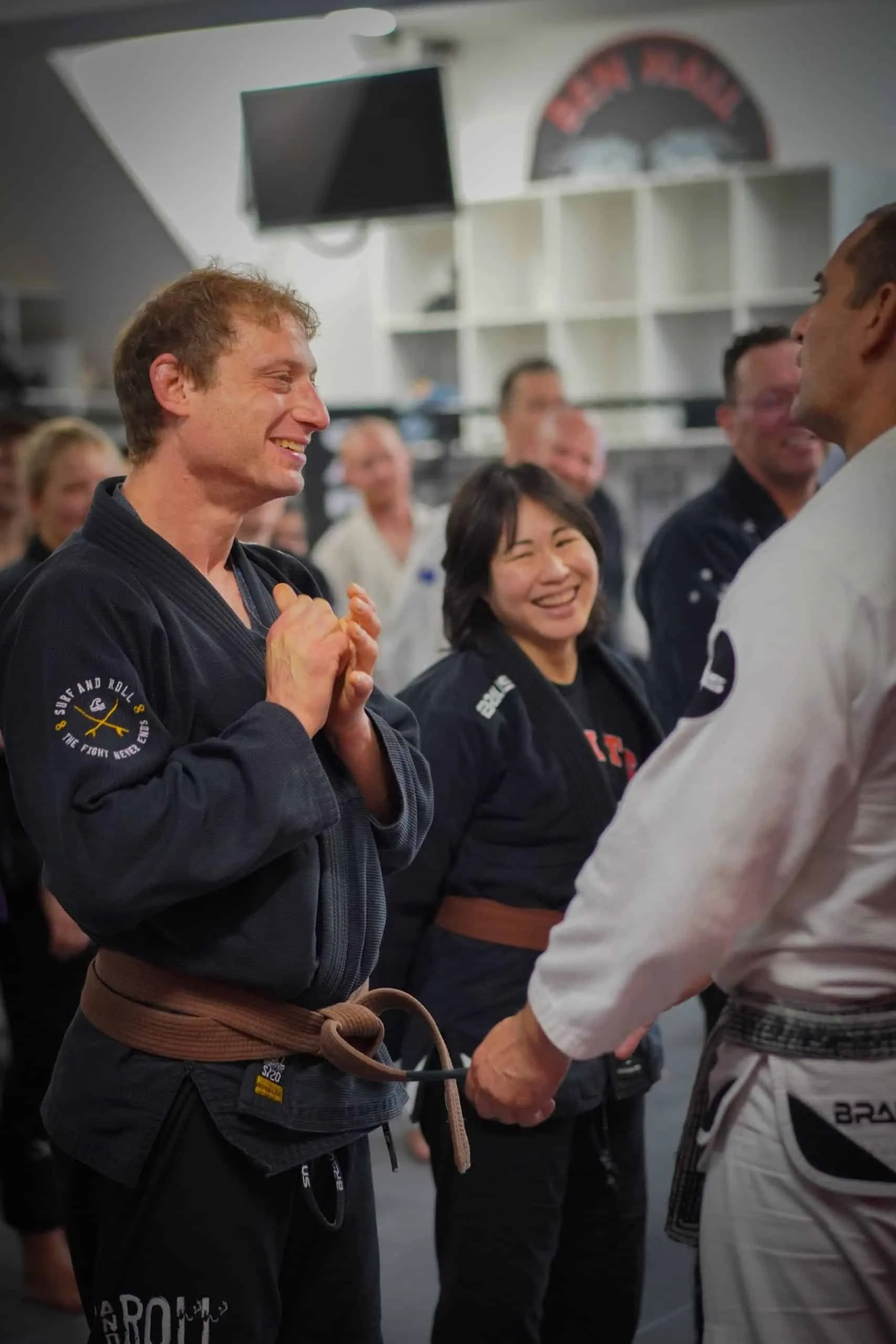
Prof. Ben Hall
4th degree black belt under Carlson Gracie Jr. 21 of his students have earned their black belt at this academy. Read his full story.